
Two thumbs up, one down
CreativeArt / stock.adobe.com
2026-06-24 expert contribution

DKE Extends an Invitation to the IEC General Meeting in Hamburg - A Look at the German Position on the Topic of Consensus

Approximately 3,000 experts from all over the world will gather at the IEC General Meeting in Hamburg, where over 1,000 meetings have been scheduled. Florian Spiteller, a member of management at DKE, explained in an interview why the German approach can sometimes be too direct, why standardization begins already at breakfast, and the extent to which pressure can give way to opportunity.

Contact
Christian Marian

Expert discussions and unforgettable memories

DKE: The world of electrotechnical standardization will be welcomed at the IEC General Meeting in Hamburg on November 14 to 20, 2026. For starters – your very own personal view of the event: What can participants expect to experience?

Spiteller: Our aim is to ensure that anyone who would like to attend will also be able to do so. And that is why more Technical Committees, or TCs, will be represented this year than is normally the case at General Meetings. All in all, we will have more than 1,000 lower-level meetings within a period of just three weeks – which, of course, presents us with more than a few challenges. Our efforts will be focused on creating as many opportunities as possible for personal exchange.

However, we don’t want everyone to simply talk shop at the various venues that will be located in the beautiful city of Hamburg. The opening ceremony and final party will also provide for unforgettable memories that each participant can then share back at home. But to keep up the excitement, I’d prefer to keep the actual program under wraps.
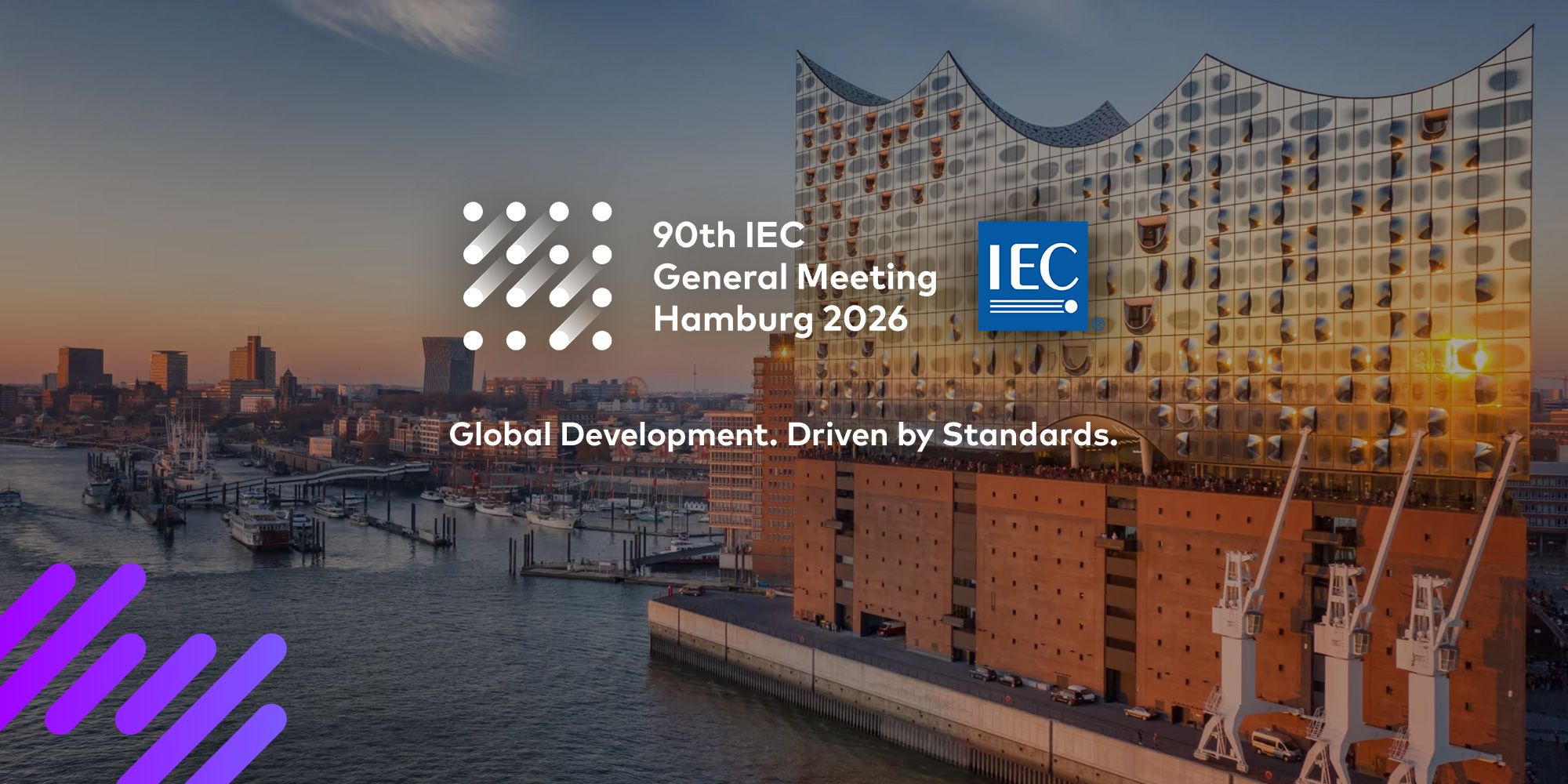

IEC General Meeting 2026

The DKE is honored to host the annual event for international electrotechnical standardization. Under the title “Global Development. Driven by Standards.”, around 3,500 guests are expected in Hamburg in November 2026.

Official Website

Debatable principles, intense negotiations and time pressure

DKE: In exercising your functions at DKE, you naturally have your own view when it comes to the topic of consensus – one of the main topics at the General Meeting. To put it in a nutshell: What are the key challenges in your opinion?

Spiteller: The topic of consensus within DKE does not stop with me. My position as the German member of the IEC Standardization Management Board means that I constantly communicate with a number of my colleagues. The fact is: Since IEC standards are based on consensus – in contrast to the standards established by consortia – we have to overcome various challenges.

This means reconciling the views of many different countries, all of whom have their own voice. At the same time, consensus is not achieved simply by having a 51-percent majority, as in a democratic election. Our aim is to not have anyone actively oppose a standard – meaning that everyone has to agree or at least abstain when it comes to a decision. If this is not the case, then we have to take a step back. This is time-consuming and entails a lot of negotiating, and cultural differences play a part as well. There are those who openly express criticism during the process, while others are silent until the very end.

Whatever we do, we are driven by industry – because the best scenario is that standards are available once a product or technology is ready to go to market. Thus another challenge consists in reaching a consensus in a time frame that is acceptable for everyone involved.

An approach that is too stringent can overhear critique

DKE: A good saying. One of the topics that is most often discussed when it comes to consensus in standardization is the speed of implementation. How can Germany contribute to a global consensus?

Spiteller: One part of our contribution is to prepare the national consensus – there we have a good footing, and it works well. The challenge consists in providing constructive support on the path toward international consensus. Germany takes a leading role in several areas. We are relatively strict and direct when chairing meetings. From a German perspective, this is efficient, but it also risks overhearing more subtle input. This in turn can cost time and put consensus at risk, because when objections are only voiced when it’s time to vote, then we have to open up the package again and find a solution.


Icon book
VDE

Basics of standardization: explained briefly and clearly

To understand the principles and fundamentals of standardization, you only need to know a few things. The basics include definitions, basic terms and explanations of processes and objectives, as well as further information on norms and standards.

Read more

Soft skills and personal meetings as success factors

DKE: What are the skills that experts need in order to chair committees?

Spiteller: In my opinion, soft skills are the key to having an eye for cultural and human considerations, as well as the ability to deal with them appropriately. Thus it is very important to provide for personal meetings whenever possible. They create a setting for building relationships on an equal footing. And in terms of compliance, the aim is certainly not to influence someone else’s opinion. But when it comes to someone that I know personally, I can address a critical issue more easily than with someone whom I have only experienced online.

That too is what makes an event like the IEC General Meeting so interesting. And this personal exchange is not limited to the various meetings; it begins instead with the first cup of coffee or tea at 6:00 a.m. until the day draws to an end at the hotel bar in the evening. Moreover, colleagues from the various Technical Committees come into direct contact with each other; a circumstance that is not always possible and one that is of particular value.

Digitalization in the sphere of standardization requires consensus

DKE: There are a number of approaches when it comes to keeping pace with technological developments and adapting the relevant processes to new scenarios. What are they, and what stance does Germany take in this regard?

Spiteller: One of the technical topics that concerns us most is the Digital Product Pass. In order to provide the required support for such a topic quickly enough from a standardization perspective, we have to allow for changes in our system. In my opinion, standardization needs digitalization. But the changes to our processes as a result of digitalization also require consensus before the IEC is able to glean the requisite measures. The question also is how such an initiative can be implemented. While there are countries that are able to implement such requirements quickly, or even immediately, others need more time. More than likely, we will not be able to wait for everyone, and so a compromise will be necessary.

DKE: And what role can artificial intelligence play with regard to speed?

Spiteller: I think artificial intelligence can certainly help us to get things done faster, although more in terms of intermediate steps such as recording the minutes of meetings, providing translations, or drafting documents. In my opinion, however, consensus itself cannot be reached with the help of artificial intelligence as this involves both quality and trust.


Woman in a hologram with globe

Interview with Maria Lazarte and Francis Pernel

| metamorworks - stock.adobe

SMART Solutions for Standards: Why now is the moment to act

SMART solutions for standards are no longer a future concept – they are becoming a defining factor for how standards deliver value in a digital world.

Why this shift affects the entire IEC community and why everybody now have a unique opportunity to benefit explained Maria Lazarte and Francis Pernel in our interview.

Read now

Quick wins and a lot of patience

DKE: As you already pointed out, standardization is also based on consensus when it comes to modernizing the principle of consensus itself and one’s own processes. So how will DKE as the host of the General Meeting contribute to finding a solution? How long will it take to realize new approaches?

Spiteller: As the host, we can offer a platform for topics, opinions and innovative ideas. We can support and push processes while creating a space for discussion. What is clear to all of us is that standardization is under pressure.

This situation is not only challenging; it offers opportunities to change for the better. That is our common task at the General Meeting. I think we will see a number of quick wins that can be achieved within half a year, while other items will take another two or three years before they take effect.

150 days until the big moment

DKE: To wrap things up, how about a personal perspective: What are you looking forward to the most at the IEC General Meeting in Hamburg?

Spiteller: I’ll be happy when it finally starts! We have another 200 days left until the opening. That is still a lot of time on the one hand, but there is also still a lot of work to do. But it will all be worth the while once we get to see the – hopefully – curious and happy faces of our guests.

The interview was conducted with:

Florian Spiteller

Florian Spiteller is Head of External Relations & Support at DKE (DKE German Commission for Electrical, Electronic & Information Technologies of DIN and VDE) and a member of the board of management. In exercising this function, he coordinates DKE’s international relations with standardization organizations such as IEC, CENELEC and ETSI and represents German interests in global electrotechnical standardization.


Relevant news and information about standards