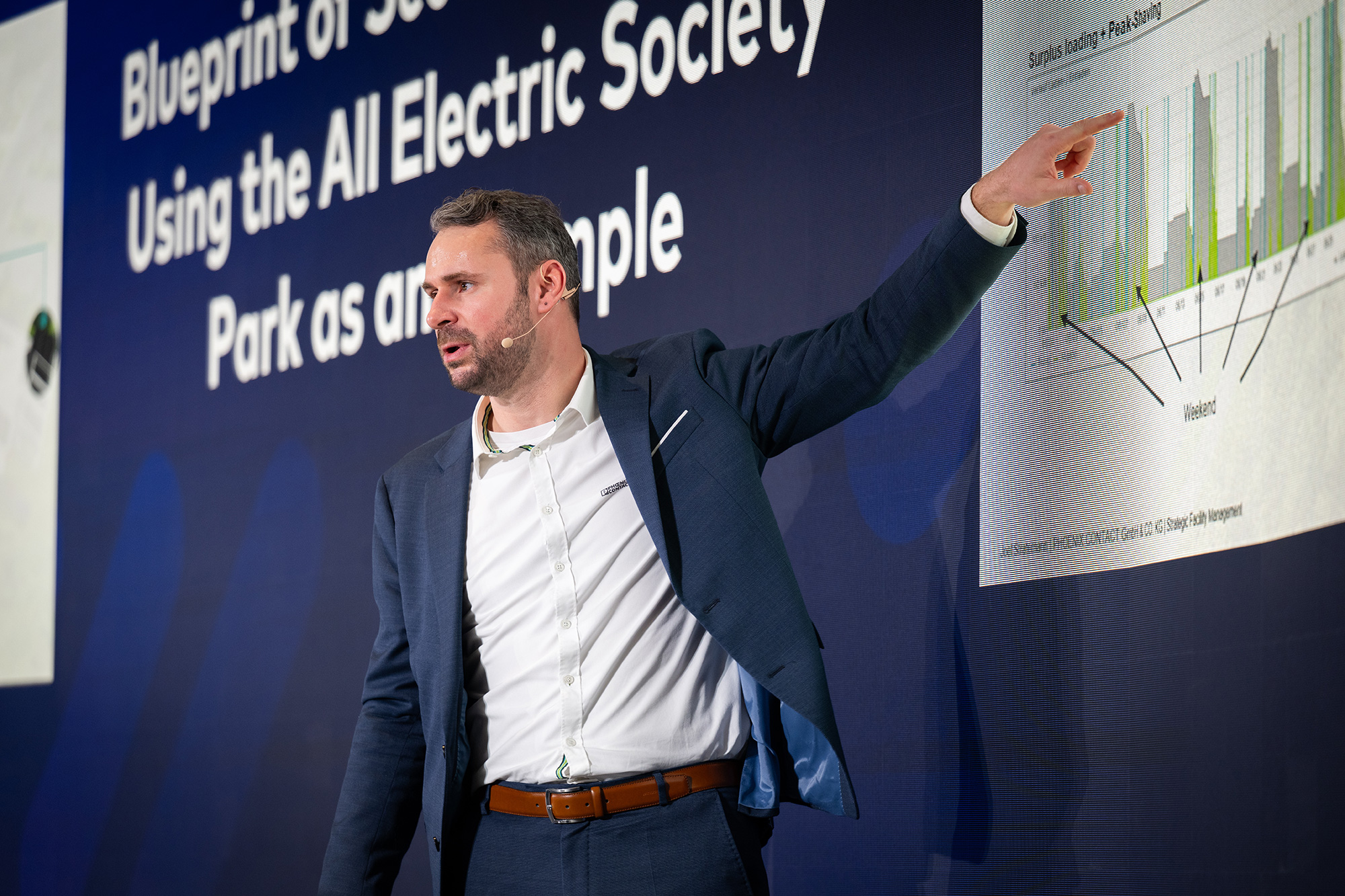
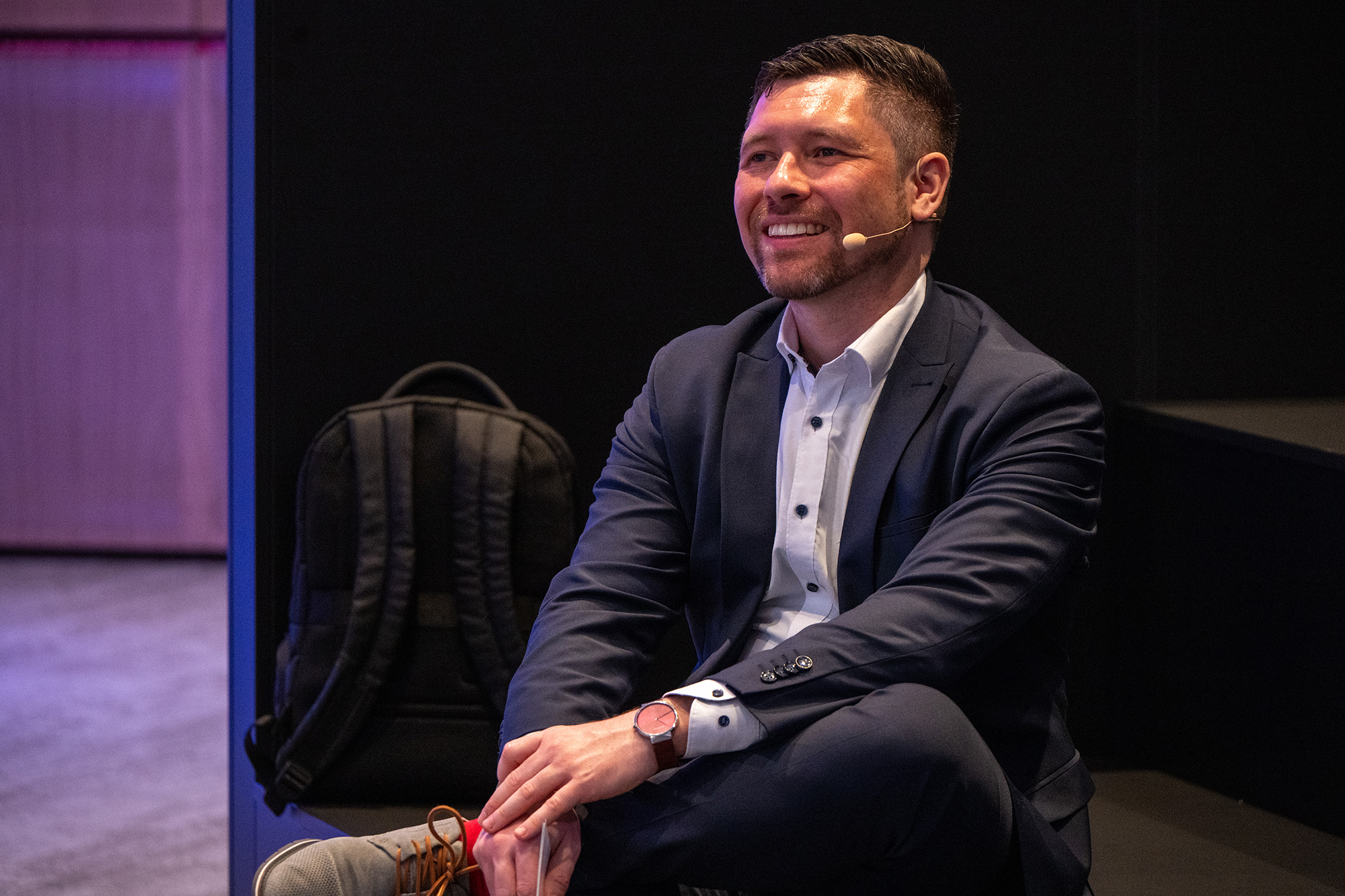
Joel Stratemann demonstrates just how effective standardization is in a realworld setting. The Senior Technology Manager at Phoenix Contact discusses the All Electric Society Park in Blomberg, East Westphalia, which uses and stores renewable energy. Here, photovoltaics, battery storage, and a bidirectional heating and cooling system work in tandem - controlled by electrical and thermal energy management systems. As a result, no CO2 is emitted during operation. “This integration only works because there are defined standards for IT-based sector coupling, which enable everything to be networked and controlled,” says Stratemann. “This is a blueprint for sector coupling and demonstrates that it is not just a vision, but it can already be implemented with the resources currently available.” The key lies in how the technologies work together.
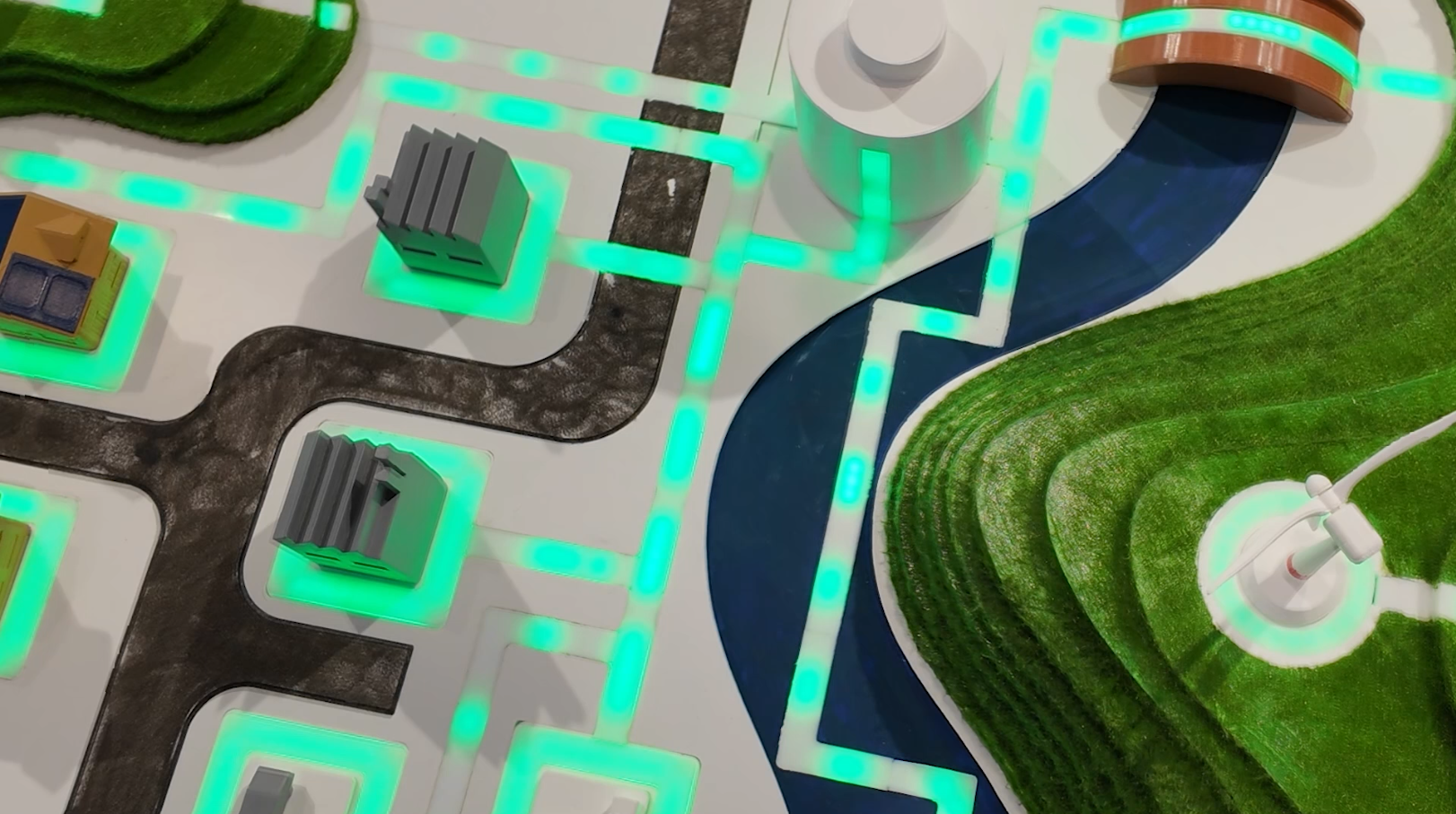
What is explained on stage can be vividly experienced just a few meters away: In the Transformation Space, the All Electric Society Park is one of the selected best-practice examples. Johannes Stein stands in front of it, examining the model in detail. “I’m thrilled that the vision of an All Electric Society is truly being brought to life here,” says Stein, who is responsible for this topic at DKE. “Electrification is the solution for the future because it is safer, more affordable, more sustainable, and more resilient than carbon-based energy sources. Whenever it is possible in the standardization process, we first assess whether electrification makes sense and than work toward this as our goal.”
Mahlatse Fortunate Hlanga is also enthusiastic about the examples. She traveled from South Africa to attend the IEC General Meeting, and this is her second time here. “I have been very much inspired by the Transformation Space and plan to share this at home.” Back home, she works for a company that verifies compliance with standards for electrical installations. “The fact that we have a place here where we can exchange ideas in a very concrete manner is extremely important to me.”