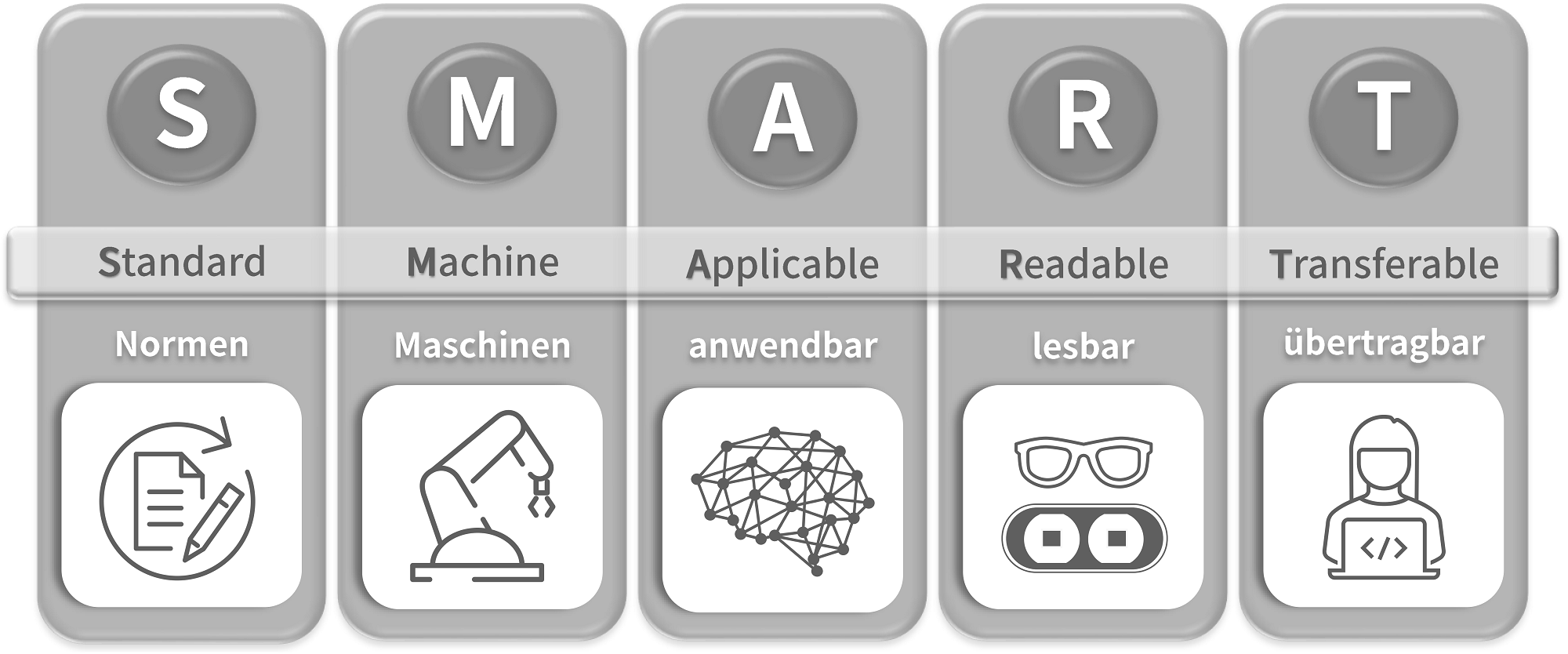
The planning of further activities has been carried out in close consultation with all parties involved and the activities concerned were formulated by IDiS participants and coordinated with international and European standardization organizations. Several key steps have already been defined in our plans. These include specifying the information that a SMART standard is to contain and how this information is to be structured.
An important aspect was the identification of the essential objects and the descriptive information associated with these objects. The result is referred to as the information model for SMART standards.
This information model is intended not only to be generic but also uniform across the various standardization organizations at the international, regional, and national levels. This enables compatibility or interoperability, respectively, between the standards of different organizations. National IDiS ad-hoc groups have already developed prototypical solutions based on an initial robust version of the information model that had been coordinated among all parties involved.
For more information on the extended utility model, see the first IDiS white paper “Szenarien zur Digitalisierung der Normung und Normen” (Scenarios for the digitalization of standardization and standards) | DIN DKE.